One Step Beyond: Fortune-Telling and the Paranormal
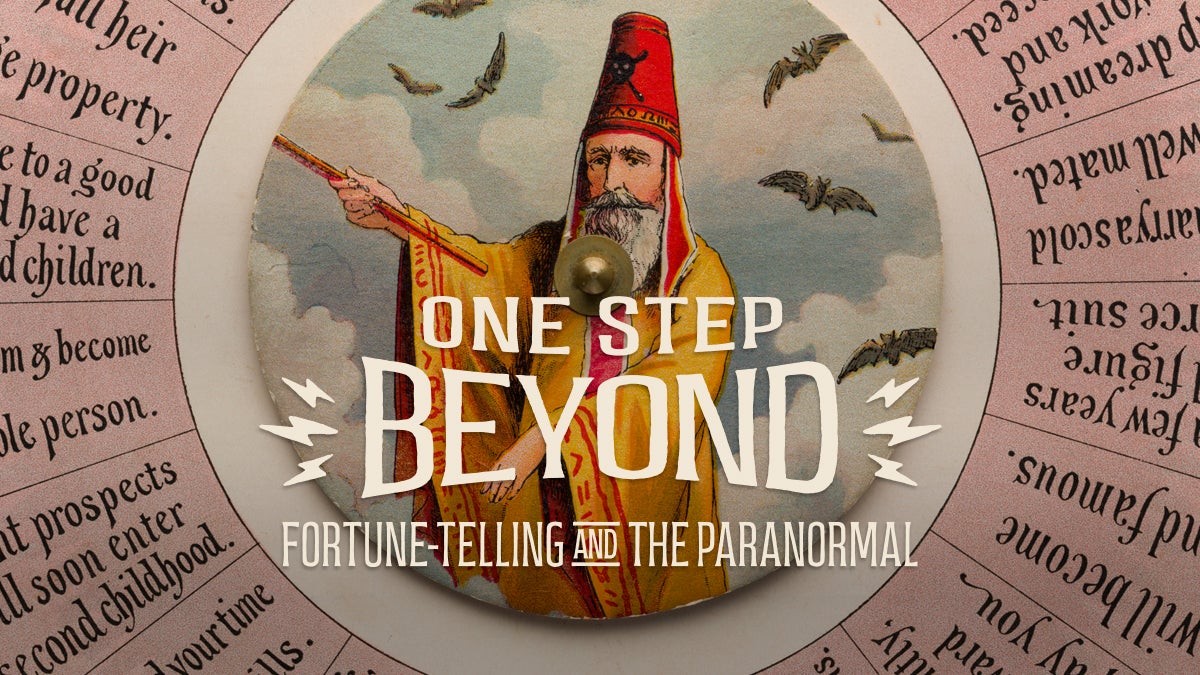
One Step Beyond: Fortune-Telling and the Paranormal
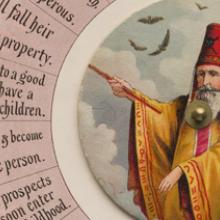
For centuries, people have turned to fortune-telling to predict the future, employing a variety of tools. Tarot cards appeared in Europe in the 1400s, but it was not until the late 1700s in France that they were first used for divination; by the 1830s, the use of specialized fortune-telling cards prevailed. The legendary French fortune teller and cartomancer Madame Lenormand (1772–1843) predicted the futures of many eminent figures in Paris—among them, allegedly, Empress Joséphine Bonaparte. In New York City, the infamous Madame Morrow (active 1850s–70s) began advertising her psychic abilities in local newspapers in 1854. Morrow was arrested several times for practicing fortune-telling and gained notoriety for advising Cornelius Vanderbilt. By the 1880s, aware of the public’s desire to glimpse what lies ahead, game manufacturers, such as McLoughlin Brothers, produced vividly printed fortune-telling board games and cards, the latter of which featured both Mme. Morrow and Mme. Lenormand.
Around the same time, Spiritualism, or the belief that the living could communicate with the dead, inspired the development of automatic writing tools, called planchettes, which surged in popularity in the U.S. by the late 1860s. These devices had a pencil and two small, wheeled legs attached, allowing them to move across a table. A medium rested their fingertips on the planchette while a spirit purportedly guided them in scrawling messages to the living. Decades later, Spiritualists paired these writing devices with simple wooden boards printed with the alphabet, allowing spirits to seemingly spell out messages, and spawning the talking board. The Kennard Novelty Company first made talking boards commercially available under the name Ouija in 1890, and they remained in demand during the twentieth century. After Parker Brothers purchased the rights to the Ouija board from the Fuld family in 1966, sales soon surpassed those of Monopoly.
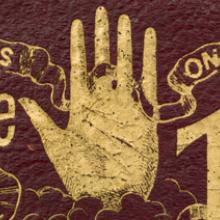
Palmistry, one of the oldest forms of divination, flourished during the late nineteenth and early twentieth centuries alongside tea leaf reading, when a fascination with occult practices captivated the public. In Indianapolis, Nellie Simmons Meier (1862–1944) analyzed the shape and palm lines of clients ranging from Amelia Earhart to Walt Disney. She took ink impressions of her clients’ hands and published examples in her 1937 book Lions’ Paws: The Story of Famous Hands. Meanwhile, potteries and tea companies took note of tea leaf reading, in which practitioners examine the patterns left by loose tea leaves after the liquid has been consumed, offering both teacups and instructional manuals, such as Lipton’s Your Future in the Tea Cup (1935).
This represents only a fraction of the intriguing material in One Step Beyond, illustrating humanity’s enduring desire to reach beyond the tangible—from crystal balls and swinging pendulums to fortune-telling napkin dispensers. Your future awaits.
Special thank you to David Brandon Hodge for contributing historical excerpts from Supernatural Machines: The History of Spirit Communication Devices (2026) and reviewing the labels, and to all the other lenders who made this exhibition possible: Cavallini & Co. Archives; Brian D. Coleman; Justin Coote; Joe Welch American Antique Museum; Brandie Knight; Mickey McGowan, Unknown Museum Archives; Eugene Orlando/Museum of Talking Boards; Henry S. Rosenthal Family Collection; and John Kozik, Salem Witch Board Museum.
@SFOMuseum
#OneStepBeyond
[inset image]
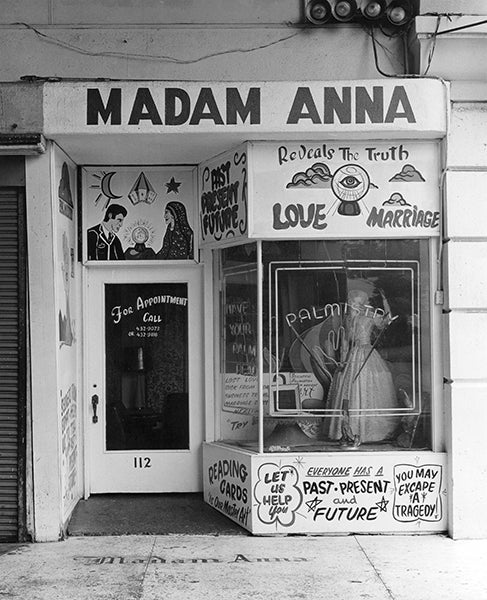
Madam Anna fortune-telling storefront 1973
William Reagh
Pike Amusement Park, Long Beach, California
Los Angeles Public Library
R2026.0614.001
© 2026 by San Francisco Airport Commission. All rights reserved.