Indoor Eden: Victorian Jardinières
`
Indoor Eden: Victorian Jardinières
The British Empire developed elaborate trade networks by the close of the seventeenth century, importing exotic plant species from around the world—from the Americas to Asia. Only affluent collectors had the means to acquire such specimens until advancements in transportation and commercial plant cultivation during the Victorian era (1837–1901) made houseplants more accessible. Glass became less expensive, larger windows allowed more light to enter, and indoor heating systems improved. At the same time, the Industrial Revolution drew more people to cities, where they often had limited access to outdoor spaces, furthering people’s desire to bring nature indoors. Additionally, new suburbs and towns on the outskirts of cities offered housing with small plots for gardening. These factors combined to foster a zeal for horticulture in England that transcended class boundaries.
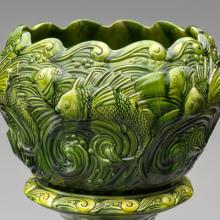
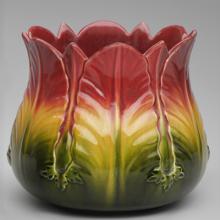
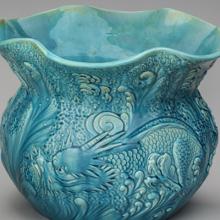
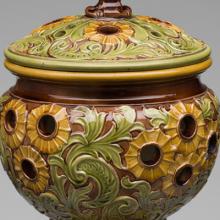
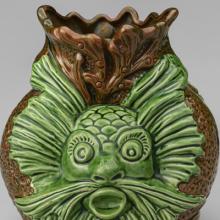
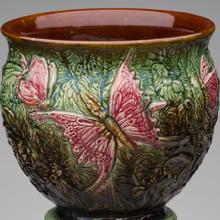
Plant enthusiasts adored hardy species such as parlor palms (Chamaedorea elegans) and the cast iron plant (Aspidistra elatior), so called for its ability to tolerate dismal conditions, from low light to gas-lit homes. Simultaneously, a passion for ferns of all kinds, referred to as “pteridomania,” reached a fever pitch. Commonly referred to as jardinières from the French word for “female gardener,” ornamental pots and plant stands served as essential components of indoor décor. Jardinières reflected the Victorians’ love of elaborate ornamentation—pots might be bedecked with botanical patterns, butterflies, and sea life, as well as historical and Japanese-inspired motifs, with thick, rich glazes. The shapes and sizes of jardinières varied considerably to accommodate different plant types and room arrangements—from large-scale pots on matching pedestals that served as focal points in rooms to smaller vessels for placement on side tables and windowsills. Larger potteries, like Minton in Staffordshire, as well as smaller art pottery studios, such as Bretby and Ault Pottery in Derbyshire, supplied the demand for wares.
A profusion of gardening literature, including books, periodicals, and catalogs, educated an eager public fascinated by horticulture. Leading writer Shirley Hibberd (1825–90) published monthlies like The Floral World and Garden Guide with amateur hobbyists in mind. Many of these published materials discussed or offered for sale a variety of planters suitable for homes. Indoor Eden showcases an array of English jardinières, pedestals, and vases, while also exploring historical topics, from Wardian cases, or the first terrariums, to fern fever and floriography. These objects and stories combine to explain some of the origins of our love of houseplants, decorative planters, and the continued desire for green spaces today.
This exhibition was made possible through a generous loan from Brian D. Coleman.
[inset image]
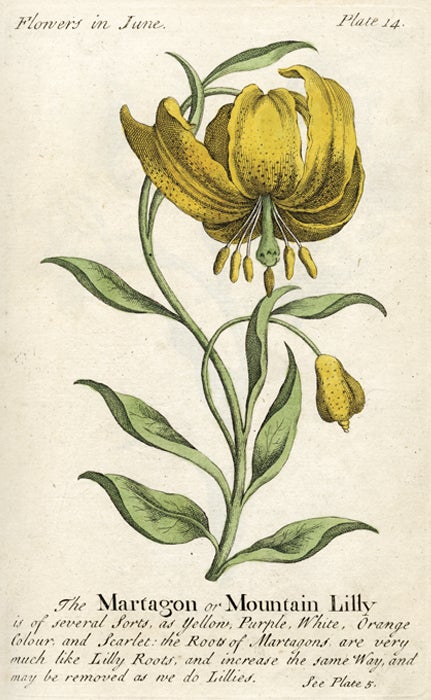
Martagon or Mountain Lily 1747
The Compleat Florist
London
Courtesy of Cavallini & Co. Archives
R2025.0502.010
© 2026 by San Francisco Airport Commission. All rights reserved.