Going the Distance: Endurance Aircraft Engines and Propellers of the 1910s and 20s
Going the Distance
Endurance Aircraft Engines and Propellers of the 1910s and 20s
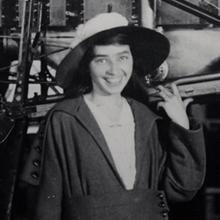
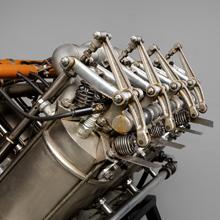
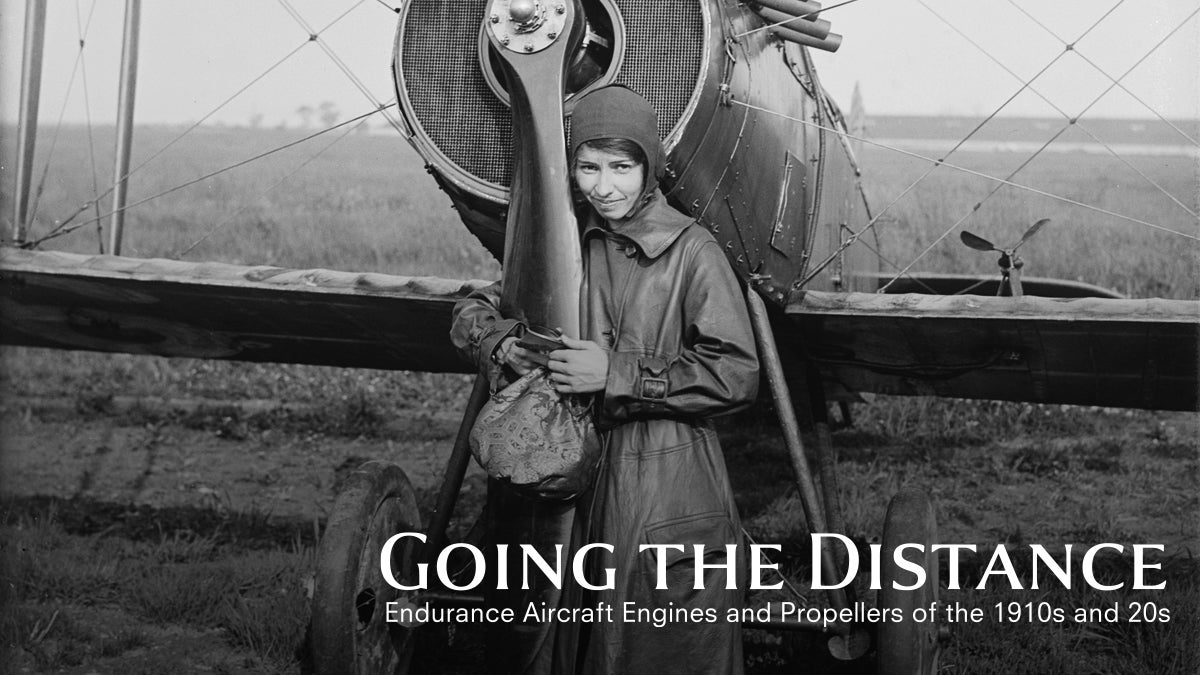
In the early years of powered flight, three different types of engines, the radial, the in-line, and the V-type, vied for preeminence within the aviation industry. In-line and V-type aircraft engines have cylinders set side-by-side in rows and often require a circulating, liquid cooling system with a radiator. Radial aircraft engines have cylinders that encircle the crankcase, allowing for more efficient cooling as air circulates freely around the cylinders. They also do not require the additional weight of a liquid cooling system. Glenn H. Curtiss (1878–1930), an early innovator of motorcycle engines, began developing V-type engines for airships around 1904. After modifying and improving his engines for airplanes, he developed the V-type, liquid-cooled V-8 OX series. Equipped with a Curtiss OXX-6 engine, aviator Katherine Stinson (1891–1977) flew in a modified Curtiss biplane from San Diego to San Francisco in 1917, covering a distance of 606 miles in nine hours and ten minutes for a new endurance record.
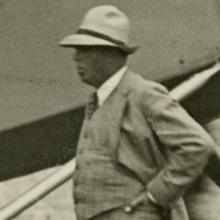
Introduced a little over a decade later, the radial Wright J-5 Whirlwind engine was specifically developed for long-range flight and was instrumental in advancing aviation during the late 1920s and early 1930s. Following Charles Lindbergh’s (1902–74) 1927 transatlantic flight with a J-5 installed in his Spirit of St. Louis, numerous other aviators used the J-5 on record-breaking distance and duration flights. A month after Lindbergh’s flight, U.S. Army Air Corps pilots Lester J. Maitland (1899–1990) and Albert Hegenberger (1895–1983) flew the J-5-equipped Bird of Paradise from San Francisco to Hawai’i. The next year, Australian aviator Charles Kingsford Smith (1897–1935) and crew flew the J-5-equipped Southern Cross on the first transpacific flight from California to Australia, covering a distance of 7,200 miles in ten days, one of the longest flights using J-5 engines.
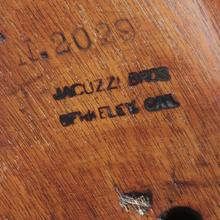
Propeller design evolved along with aircraft engine technology during this period—from wooden, fixed-pitch propellers created for specific applications to ground-adjustable, variable-pitch propellers made of advanced plastics. The Micarta propeller featured in this exhibition was used on the Bird of Paradise during its groundbreaking transpacific flight. This exhibition presents two revolutionary engines and two unique propellers, along with historical documentation of three exceptional endurance aircraft and the resolute aviators who flew them to breakthrough achievements in aviation.
Frederick W. Patterson III Collection
The two engines presented in this exhibition are from the Frederick W. Patterson III Collection. Patterson has been collecting, recovering, and restoring historic aircraft, engines, propellers, and other aviation components for over forty years. A recognized expert in “golden age of flight” airplanes of the 1920s and 30s, he has served as a technical advisor and completed numerous restoration projects of vintage aircraft to airworthy status. Vintage airplanes and engines from his collection are exhibited in museums across the country. A retired World Airways captain, Patterson resides in the San Francisco Bay Area and continues to pilot aircraft today.
@SFOMuseum
#EnduranceEngines
©2024 by San Francisco Airport Commission. All rights reserved.
[image]
Katherine Stinson in front of her Curtiss aircraft 1917
photograph
Collection of the Library of Congress, Washington, D.C.
R2020.2406.001